On Circular AI/LLM Investments
Tagged:ArtificialIntelligence
/
CorporateLifeAndItsDiscontents
/
Politics
/
ϜΤΦ
The GPU chipmakers, data center operators, and AI companies are apparently involved in an immense series of what look like kickbacks to each other, masquerading as economic activity.
Hank Green: Boggled by Circular Investment Flows
While checking in with Hank Green, I came across a video he did on the circular investment pattern in AI companies. Now, it’s the usual Hank fare: fast talking, “gee, isn’t this interesting”, and lots of fun data to think about. If you like that kind of thing, he’s a master of the form, managing to be simultaneously informative and entertaining (as one would expect of a science popularizer!).
Digging Deeper
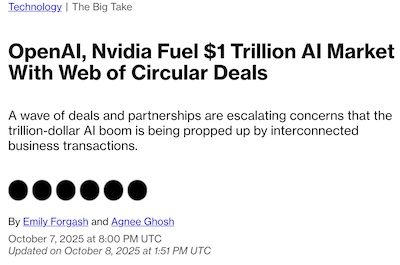
 But let’s dig into the primary sources, as we often do on this Crummy Little Blog That
Nobody Reads (CLBTNR). He’s talking about a recent Bloomberg article [1],
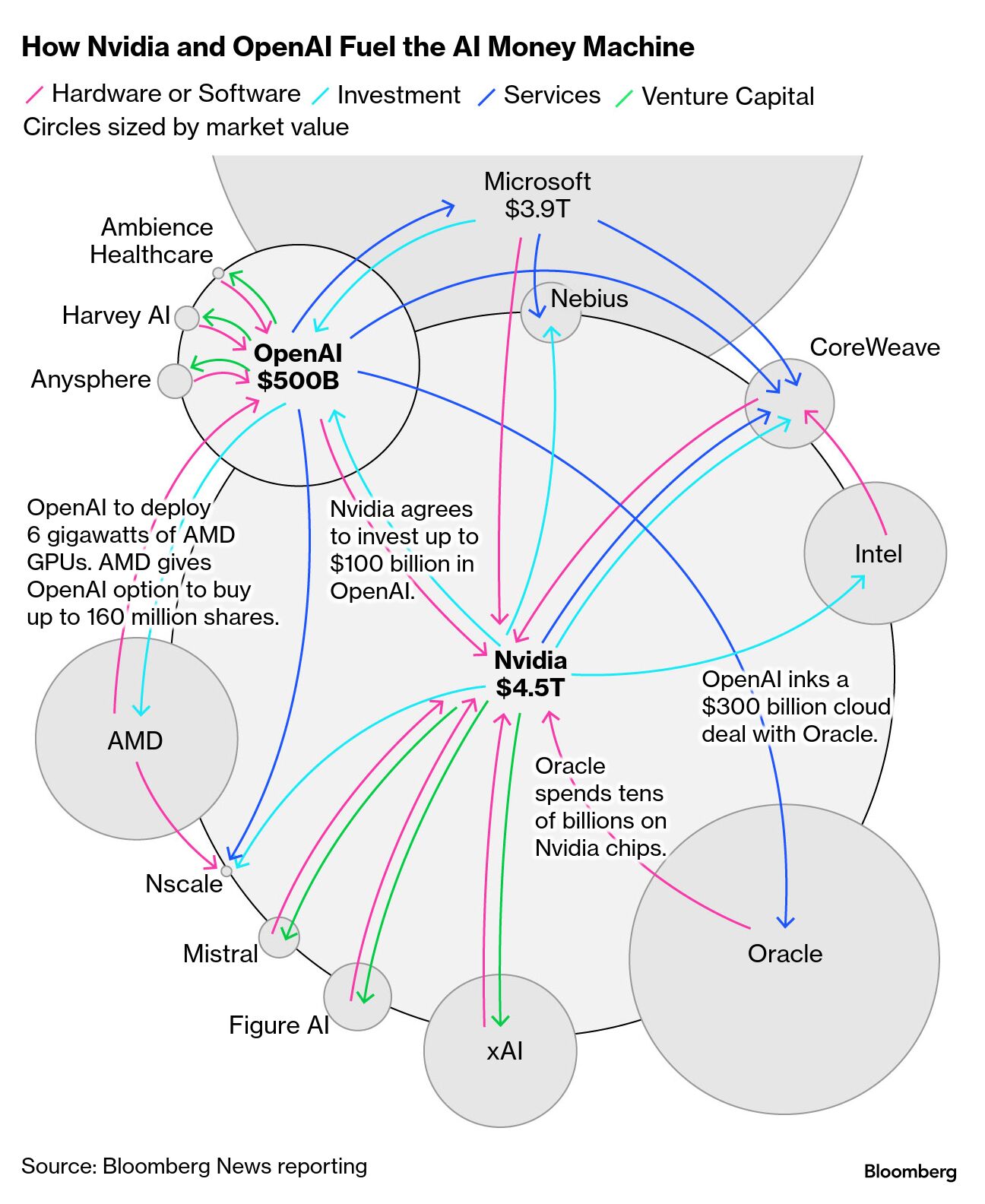
which contains the graph shown here. (Definitely click to embiggen!)
But let’s dig into the primary sources, as we often do on this Crummy Little Blog That
Nobody Reads (CLBTNR). He’s talking about a recent Bloomberg article [1],
which contains the graph shown here. (Definitely click to embiggen!)
Basically, there are 3 sorts of actors in this drama:
- The chipmakers like Nvidia, AMD, and (to some extent) Intel. They make the chips, mostly GPUs, that power the matrix calculations used in what amounts to neural net LLMs.
- The data center operators like Oracle build huge data centers with enormous computing power. They rent this out to the AI companies, q.v. (They also consume entire city’s worth of electricity and guzzle clean water for cooling; the rest of us would probably prefer not to get higher electricity bills and have more water available.)
- The AI companies who rent this compute capability. Sometimes these are upstarts like OpenAI (worth a mere \$500 billion, also with a mere \$12 billion revenue and negative earnings). Sometimes they’re Microsoft and Google, who are maddeningly determined to force AI into everything, whether you want it or not. (I do not.)
Sometimes the middleman, the data center operator, is there and sometimes it’s not because the data center has been absorbed into a giant like Google or Microsoft. But that’s more or less the dramatis personae.
Now, on to the drama. Here are a couple examples from the opening of the Bloomberg article:
- Nvidia ‘invests’ \$100 billion in OpenAI, to fund a data center with the electrical consumption of a major city. In return, OpenAI commits to buying billions worth of Nvidia chips.
- Advanced Micro Devices (AMD) and OpenAI have a similar deal, on the tens of billions in scale.
- OpenAI struck a \$300 billion deal with Oracle to build massive data centers, powered with Nvidia chips. Oracle is then renting that capacity back to OpenAI, with guarantees that OpenAI will lease all of it. Oracle can now book \$100’s of billions in revenue… sometime in the future from a company with \$12 billion in revenue and negative earnings… somehow.
- Similarly, Nvidia has ‘invested’ in CoreWeave, ‘sold’ them chips paid for out of that investment, and guaranteed to buy all the compute power that CoreWeave’s AI customers don’t buy. That’s a great risk arbitrage for CoreWeave, but it means Nvidia’s taking almost insane levels of risk.
In other words, the hardware makers are paying their customers to buy their products. This is not outside investment, it’s just a handful of companies moving money around and variously calling it ‘investment’ or ‘revenue’, as they please.
There are tons of other examples in the Bloomberg article. The graph above summarizes just some of it. A couple dozen companies are shifting around commitments to invest, then hardware, and finally services. Sometimes this is an investment, sometimes it’s revenue.
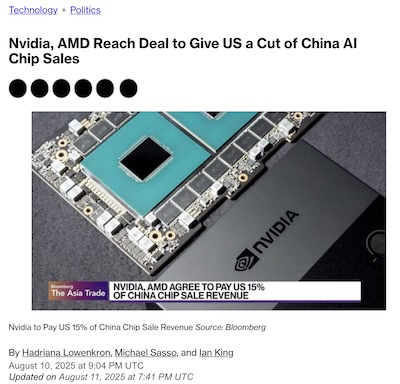 It looks corrupt as hell to me, and that’s not even counting Trump’s extortion of part of
the cash flow to Nvidia and AMD. [2] It also looks like the
cross-selling financial ouroboros, among
late-90s startups, just before the dot-com crash.
It looks corrupt as hell to me, and that’s not even counting Trump’s extortion of part of
the cash flow to Nvidia and AMD. [2] It also looks like the
cross-selling financial ouroboros, among
late-90s startups, just before the dot-com crash.
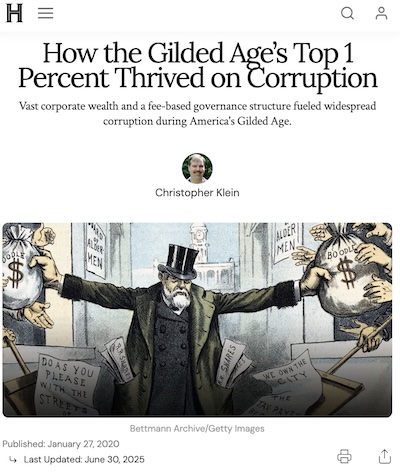
In fact, this begins to resemble the 19th century corruption of the Gilded Age, which must now regrettably be called the “First” Gilded Age, the “Second” being now. Between the circular movement of money, bizarre accounting for when it gets called revenue, and Trump’s extortion of a cut of the trade, this is exactly what was done then [3]:
“This is a government of the people, by the people and for the people no longer,” former president Rutherford B. Hayes wrote in his diary in 1886. “It is a government by the corporations, of the corporations and for the corporations.” Politicians took spectacularly handsome bribes from corporations and demanded kickbacks as the helping hand they extended often came with an open palm.
We really are in a Second Gilded Age of corrupt oligarchs, monopolies, and politicians, aren’t we?
A Contrary Opinion
Now, not everybody agrees with me. (Sadly.)
But in a spirit of objectivity that is the sine qua non of all scientists, let’s have a look at another Bloomberg interview that offers a contrary opinion.
This one is with Mandeep Singh, their Bloomberg Intelligence Global Head of Technology Research. A heuristic I learned many years ago is perhaps too sarcastic, but sometimes applies: the importance of your position is inversely proportional to the number of words in your title. Example: “President” is pretty important. Example: “Deputy Undersecretary for Intergovernmental Affairs in International Cheese Trade” is… less important. I’m not saying that this applies to Mr. Singh, but I am revealing to you my bias. Discount appropriately.
His argument is, in essence, that AI demand will definitely undergo hyperscaling levels of growth, because everybody wants it. Now, that’s contrary to my experience, where pretty much nobody wants it, and examples abound of AI used ignorantly create everything from absurdities to life-endangering hazards. But, if his “definitely” scenario is true, in order to profit from it you need to grow as fast as possible.
The circular funding arrangements that appear so corrupt to me, are to him just a way of companies lending each other resources to grow.
Will it collapse? Singh is optimistic:
… yes, there will be probably some misallocation of capital that we’ll find out in retrospect that this capital was misallocated in some way. But right now, it’s very hard to question the pace of this build-out because there’s still that big gap between demand and supply. And until that narrows, it’s hard to question why capital is going in this domain, because, I mean, it should.
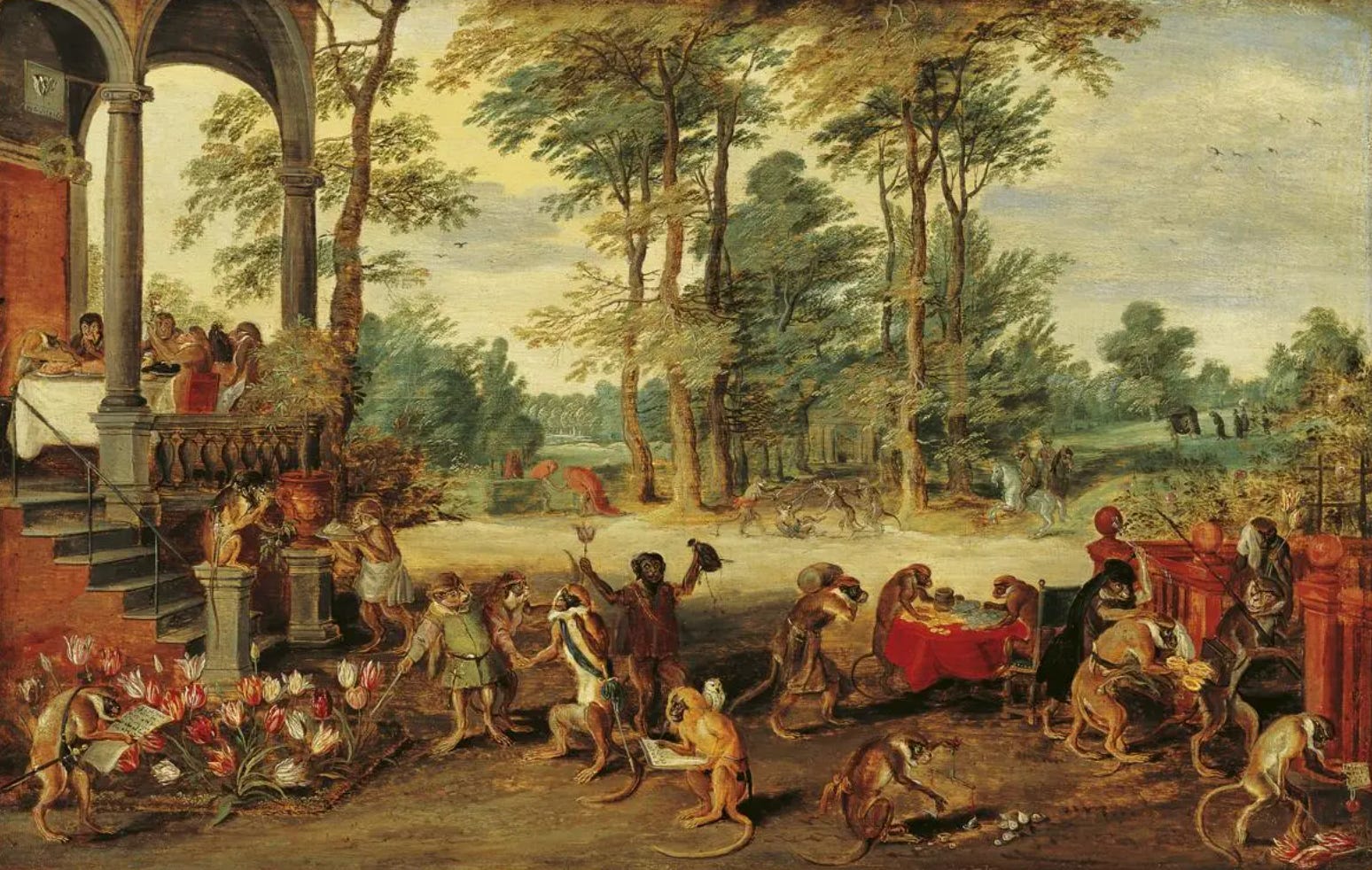 Now, I think he’s deeply deluded:
the Dutch tulip prices in the 1630s kept going up too… until they didn’t.
But that’s his viewpoint, presented in as honest a fashion as I am capable of doing.
Now, I think he’s deeply deluded:
the Dutch tulip prices in the 1630s kept going up too… until they didn’t.
But that’s his viewpoint, presented in as honest a fashion as I am capable of doing.
There is, of course, uncertainty! In the words of the Bloomberg article, describing the power of Sam Altman, as CEO of OpenAI:
Altman “has the power to crash the global economy for a decade or take us all to the promised land,” Stacy Rasgon, an analyst with Bernstein Research, wrote in an investor note this week. “Right now we don’t know which is in the cards.”
Personally, I think he’s driving all of us into a crash, or worse.
The Weekend Conclusion
Go look at that Bloomberg diagram which so fascinated Hank. It’s pretty damning.
AI/LLMs are a bigger bubble than the 2007-2008 financial panic, and bigger than the 2000 dot-com crash. This time, with what looks like a side of self-serving kickbacks.
Didn’t that used to be illegal?
Here at Château Weekend, it’s oligarch crap like this that made us reallocate our retirement portfolio to be the most defensive it’s ever been in our lifetimes. We still don’t know if that will be enough.
(Ceterum censeo, Trump incarcerandam esse.)
Notes & References
1: E Forgash & A Ghosh, “OpenAI, Nvidia Fuel $1 Trillion AI Market With Web of Circular Deals”, Bloomberg, 2025-Oct-07, updated 2025-Oct-08.
NB: Regrettably paywalled. An archive version is available here. (You might have to pause your VPN.) ↩
2: H Lowenkron, M Sasso, & I King, “Nvidia, AMD Reach Deal to Give US a Cut of China AI Chip Sales”, Bloomberg, 2025-Aug-10, updated 2025-Aug-11.
NB: Also regrettably paywalled. An archive version is available here. (You might have to pause your VPN.)↩
3: C Klein, “How the Gilded Age’s Top 1 Percent Thrived on Corruption”, History.com, 2020-Jan-27, updated 2025-Jun-30. ↩
Gestae Commentaria
Comments for this post are closed pending repair of the comment system, but the Email/Twitter/Mastodon icons at page-top always work.